


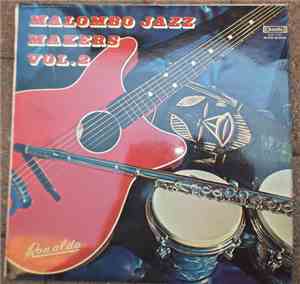
Malombo Jazz Makers - Malombo Jazz Makers Vol. 2
- Singer: Malombo Jazz Makers
- Album's title: Malombo Jazz Makers Vol. 2
- Genre: Jazz, Folk, World, & Country
- Label:
Gallo – SZB 8162
Type: Vinyl, LP, Album
Country: South Africa
Date of released: 04 Oct 1971
Category: Jazz, Folk, World, & Country
Style: Soul-Jazz, Cape Jazz, African - Format: FLAC MP3 AU XM MIDI MMF AA VOC DXD
- Size MP3 ZIP: 1453 mb
- Size FLAC ZIP: 1688 mb
- Rating: 3.9/5
- Votes: 256
Links
- 1453 downloads at 19 mb/s
MP3 version
- 1688 downloads at 22 mb/s
FLAC version
Tracklist
| A1 | Ngivulele |
| A2 | Udondolo |
| A3 | Soul of Africa |
| A4 | Jolly Journey |
| A5 | Umkhosi |
| A6 | Majazana |
| B1 | Abbey's Body |
| B2 | Vukani |
| B3 | Hleziphi |
| B4 | Sibathathu |
| B5 | Malombi Walk |
| B6 | Emoubane |
Companies, etc.
- Published By – African Music Publishers
- Printed By – Interpak
Credits
- Drums – Julian Bahula
- Flute, Harmonica, Composed By – Abbey Cindi
- Guitar – Lucky Ranku
- Liner Notes – Ike Magashule
- Vocals – Hilda Tloubatla
Notes
It was at the 1964 National Jazz Festival at the Orlando Stadium, Johannesburg, that the Malombo sound hit us. It was a dynamic sound that made long-established musicians sit back and listen. Two of the men playing on this disc - Abbey Cindi and Julian Bahula - were right there on stage with their former leader, Philip Tabane, revolutionising the South African jazz scene.The Malombo Jazzmen, as they were known then, had been in circulation for some years, but they were becoming national property for the first time. They are now the Malombo Jazzmakers, with Abbey as leader, Julian Bahula still around,and Lucky Ranku taking over from Tabane. The sound remains essentially the same as three years back.
The scope of our jazz has been widening in the past few years, but it took young men like Abbey Cindi to improve - drawing from many sources - and inject into it something that has been lacking—originality.
The Malombos are one of the groups that have come up with this originality - the mainstay of art. It's known that the shaping of a mature jazz combo is a long slow process. Not with the Malombos. After their hit at the Festival, where they got away with the first prize, they became a household name, demanded at almost every jazz concert, throughout the country.
Their popularity is not surprising: the blues is their forte.
Says leader Abbey Cindi: "Our music is indigeneous and soulful. It is tribal—all African tribes."
In spite of what he says, they remain basically a jazz combo. To the Negro blues, the Malombos have added indigeneous African tribal rhythms—their main departure from the mainstream jazz we have been listening to. They also use the decades' old 12-bar structure in most of their tunes, but with the pulsating Malombo drums of the Venda tribe in the Northern Transvaal.
The music in this album is composed and arranged by the 28-year-old flutist. Abbey Cindi. "When the applause has died after an evening show, when I have said goodnight to my friends, when I reach my lonely Pretoria room, and when sleep refuses to come... that is the time I write my music," he says. "I work best in 3/4 time. It seems to purge me of that blue feeling. I use the sounds and rhythms that I have been hearing around the townships since I was intelligent enough to hear."
What he says is demonstrated in a Zulu rendition in the 12-bar mould, Ngivulele, meaning "Open for me." The tune is sung by Hilda Tloubatla. And this is the first time that the Malombos have used a vocalist in their recordings, although they have backed a number of leading singers on our stages.
The story of the Malombos is simple to tell: Abbey, Philip, and another three lads started their music career in 1959 as a close harmony vocal group, titling themselves the Lullaby Landers. When the group disbanded in 1962, Abbey transferred his interest to the flute and harmonica while Julian started playing the then generally unknown Malombo drums, which give a conga-like sound. The guitarist of their vocal group. Philip Tabane, teamed up with them. Results: Birth of the Malombo sound.
As they themselves explain, the word "Malombo" is Venda for spirit. The spirited performance of Julian Bahula on the tall, traditional drums sent thousands of fans into frenzies and in less than eighteen months the Malombos had climbed to the top. Incidentally when a session gets really hot, Julian is forced to remove his shirt and shiny sweat streams down his brown torso.
It was only when Tabane left the group that young Lucky got his lucky break and joined the group as guitarist.
Lots have been written about "Malombo", but they remain a capable combo expressing a great variety of emotions within the blues framework happy abandonment, great sadness.
Their music keeps the blood warm.
The simple act of listening will be self-explanatory.
Ike Magashule
(P) 4-10-71
Related music:
-
Abbey Lincoln Featuring Stan Getz - You Gotta Pay The Band -
Jabula - Jabula -
Abbey Lincoln - Hank Jones - When There Is Love -
Various - Rhythm Of Resistance - Music Of Black South Africa -
Phillip Damien - Cindy Cindi -
Abbey Lincoln - Hank Jones - When There Is Love -
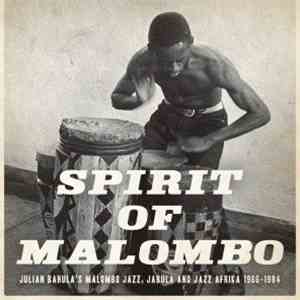
Malombo Jazz Makers, The Malombo Jazz Men, Malombo Jazz Makers Plus 2, Malo ...