


Various - Cajun Social Music
- Singer: Various
- Album's title: Cajun Social Music
- Genre: Folk, World, & Country
- Label:
Folkways Records – C-SF 40006
Type: Cassette
Country: US
Date of released: 1990
Category: Folk, World, & Country
Style: Cajun - Format: FLAC MP3 VQF AU VOC TTA AHX MPC ASF
- Size MP3 ZIP: 1853 mb
- Size FLAC ZIP: 1733 mb
- Rating: 3.5/5
- Votes: 381

Links
- 1853 downloads at 19 mb/s
MP3 version
- 1733 downloads at 22 mb/s
FLAC version
Tracklist Hide Credits
| A1 | –Hadley Fontenot, Sady Courville, Preston Manuel | 'Trape Mon ChapeauAccordion – Hadley FontenotFiddle – Sady CourvilleGuitar, Vocals – Preston Manuel |
| A2 | –Milton Mélançon, Marc Savoy, Lurlin Lejeune | Jolie BlondeFiddle – Marc Savoy, Milton MélançonGuitar – Lurlin Lejeune |
| A3 | –Marc Savoy, Milton Mélançon, Lurlin Lejeune, Adausas Thibodeaux | Tout Ça C'est Dur A CroireAccordion – Marc SavoyFiddle – Milton MélançonGuitar – Lurlin LejeuneVocals – Adausas Thibodeaux |
| A4 | –Nathan Abshire, Allie Young, Armand Babineaux | Chère ToutouAccordion [Second] – Allie YoungAccordion, Vocals – Nathan AbshireTriangle – Armand Babineaux |
| A5 | –Allie Young, Bessyl Duhon, Rodney Balfa | Bosco StompAccordion – Allie YoungFiddle – Bessyl DuhonGuitar, Vocals – Rodney Balfa |
| A6 | –Marc Savoy, Milton Mélançon, Lurlin Lejeune, Adausas Thibodeaux | J'etais Au Bal Hier Au SoirAccordion – Marc SavoyFiddle – Milton MélançonGuitar – Lurlin LejeuneVocals – Adausas Thibodeaux |
| B1 | –Allie Young, Hector Duhon, Bessyl Duhon | Midnight SpecialAccordion, Vocals – Allie YoungFiddle – Hector DuhonGuitar – Bessyl Duhon |
| B2 | –Milton Mélançon, Marc Savoy, Lurlin Lejeune | La Valse De LawtellFiddle – Marc Savoy, Milton MélançonGuitar – Lurlin Lejeune |
| B3 | –Nathan Abshire, Armand Babineaux | CourtableauAccordion, Vocals – Nathan AbshireTriangle – Armand Babineaux |
| B4 | –Allie Young, Hector Duhon, Bessyl Duhon | Un Homme MariéAccordion, Vocals – Allie YoungFiddle – Hector DuhonGuitar – Bessyl Duhon |
| B5 | –Milton Mélançon, Marc Savoy, Lurlin Lejeune | Mamou Two-StepFiddle – Marc Savoy, Milton MélançonGuitar – Lurlin Lejeune |
| B6 | –Allie Young, Hector Duhon, Bessyl Duhon | La Valse D'AmourAccordion, Vocals – Allie YoungFiddle – Hector DuhonGuitar – Bessyl Duhon |
| B7 | –Marc Savoy, Milton Mélançon, Lurlin Lejeune, Adausas Thibodeaux | Osson Two-StepAccordion – Marc SavoyFiddle – Milton MélançonGuitar – Lurlin LejeuneTriangle – Adausas Thibodeaux |
Credits
- Design [Cover] – Ronald Clyne
- Recorded By, Liner Notes [Annotated By] – G. Dole*
Notes
Originally issued in 1977 as Folkways FA 2621Includes fold-out descriptive notes.
Recorded and annotated in Cajun Country in 1975.
Volume 2.
A1 recorded September 6th 1975 in Mamou.
A2 recorded September 1st 1975 in Mire.
A3 recorded September 1st 1975 in Mire
A4 recorded August 27th 1975 in Basile.
A5 recorded August 30th 1975 in Basile.
A6 recorded September 1st 1975 in Mire.
B1 recorded September 24th 1975 in Basile.
B2 recorded September 1st 1975 in Mire.
B3 recorded August 27th 1975 in Basile.
B4 recorded September 24th 1975 in Basile.
B5 recorded September 1st 1975 in Mire.
B6 recorded September 24th 1975 in Basile.
B7 recorded September 1st 1975 in Mire.
Of the Colonial French, the Acadians form the most homogeneous group in south-western Louisiana. Approximately four thousands settled in the Attakapas country, along the Bayou Tèche, Lafourche and Vermillon, coming in small groups over a thirty year period after the English dispersion of their canadian settlement in 1755.
Their descendants who call themselves Cajuns, remain to a large extent an agricultu-people who hold tenaciously to their ways. They quickly absorb, it seems, nearly every alien who comes in contact with them. Like the land, they are prolific. Indeed, a thrifty handy, fun-loving, yet religious folk who work, play and make love with equal enthusiasm.
The Cajuns' cheerful nature is manifested in the community gatherings and dances. The ball has been assuredly the epitome of leisure activity for generations.
A traveller witnessed one in the 1870's:
"The neighbourhoodball is orderly and well conducted, with whole families attending. A section known as "le parc aux petits" is provided for the babies so that the mothers can keep a careful watch on their older daughters, while the fathers enjoy a quiet game of cards in an adjoining room. The old women also come to play cards, each carrying a bag of coins with her. Some of the mothers are quite young to be relegated to places against the walls; they follow the dance with sparkling eyes.
"During the evening, a supper of chicken gumbo with rice and hot black coffee is served. When the musicians at length grow weary, they go outside and cry "le bal est fini!" Otherwise the dance loving Acadians would never go home."
Dennis Mc Gee, a fiddler born in 1893, gave me more details about the house-dances he played in his youth:
"Suppose I had a house, well they came and asked me to lend it for a ball: allright, I gave my consent. They rode around to invite young girls and at night, they got together. Women sat down on benches they had made with blocks of wood and planks; they watched their daughters, you know, in these days, a girl could'nt go out alone, no. They boy who had borrowed the house, he was the boss until the ball was through. decided which couple to put together: he stood at the door and when a guy asked him to dance, he placed him. Sometimes he let him dance, sometimes not. If he didn't like him, he left him backwards, so that he couldn't dance. This one he liked, he placed him each two, three or four sets.
"Sometimes it was a large house, sometimes it was a small house. When it was big, well, eight, sometimes twelve could dance: your turn came back quick. When it was a small one, there was room for only six maybe. Your turn never came, it took too long and you couldn't have fun. You danced a country dance and a waltz and that was all. Often the houses were packed up and you had better not show up if you hadn't been invited. Now when a guy borrowed another house, if you had been fair with him, he let you dance but if you had not been, you had to go back home without dancing at all."
Nowadays, dance-halls have replaced the old house-dances, but music is still played traditionally at such social gatherings as gumbos, ficassées, fish-parties etc...
For the circumstance, anyone who can play will bring his instrument and there is at least one capable accordion player and singer per family. One or two more guests will often join on the guitar and the fiddle, forming a one-night band for the pleasure of the dancers and listeners. There will always be a triangle to come in.
Although the Cajuns have reshaped their music to the limited possibilities of the accordion brought in in the late 1800, there are survivals of older fiddle tunes.
(For more details about instruments, dances and songs, I suggest you to read the notes of Cajun Home Music FA 2620)
The guitar was introduced in the twenties. The first one to use it regularly with the accordion, seemingly was Cléoma Breaux, Joe Falcon's wife who recorded extensively from 1928 to WWII. She had many followers and the guitar quickly became part of the rythm accompaniement which had been supplied so far by the triangle alone.
The now classical combination to play cajun music traditionally is: an aAccordion - one on two fiddles - a guitar - a triangle.
The age of the players presented in this album ranges from mid-thirties like Marc Savoy or Lurlin Lejeune to mid-sixties like Allie Young or Nathan Abshire. I recorded them at Gumbos and fish parties during the summer of 1975.
ACNOWLEDGMENTS
I wish to thank all the dear folks who welcomed me so nicely in Lousisiana
Michèle Brisse, my companion during this field trip
You can write me for any further details Gérard Dole 10 rue de Buci Paris 75006 France
Cover Photo: a Cajun Dance, Crowley La, October 1938 Lee photo. reproduced from the collections of the Library of Congress.
Barcode and Other Identifiers
- Barcode: 0 93074 00064 9
Other versions
| Category | Artist | Title (Format) | Label | Category | Country | Year |
|---|---|---|---|---|---|---|
| FA 2621 | Various | Cajun Social Music (LP) | Folkways Records | FA 2621 | US | 1977 |
| SF 40006 | Various | Cajun Social Music (LP, RE) | Folkways Records | SF 40006 | US | 1990 |
| CD SF 40006 | Various | Cajun Social Music (CD, Album) | Folkways Records | CD SF 40006 | US | 1990 |
Related music:
-
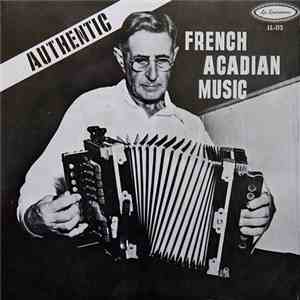
Ambrose Thibodeaux - Authentic French Acadian Music -
Billy Milton And His One Man Band - The Old Fashioned Square Dance / Dill P ... -

Dewey Balfa - Cajun Fiddle Old & New With Dewey Balfa -

Gérard Dôle and Marie-Paule Vadunthun - Bayou Memories: Louisiana French Fo ... -

The Balfa Brothers - Legends Of Cajun Music -
Iry Lejeune - Donnez Mol Mou Chapeau / La Branche De Muriee -

Mamou - Ugly Day